

Recent Blog Posts

Different Stages of Startup Financing
Startup financing occurs in multiple stages, and startup founders should not expect to obtain all the funding they need up front. Indeed, many startups must go through multiple “seed rounds” before they can even move on to the next stage of financing. There is no specific number of financing rounds a startup must have—it… Read More »

Common Forms of Equity Financing
When a startup is seeking funding, equity financing is a common option for founders. Unlike debt financing, equity financing provides startups with money for short-term needs—including building a team and creating a minimum viable product (MVP )—without going into debt. With equity financing, startup founders don’t repay the entities or individuals who provide equity… Read More »

What are the Pros and Cons of Angel Investors?
When your startup is considering early-stage funding options, one of the possibilities for raising capital that you may be considering is working with one or more angel investors. Angel investors – those investors that are more organized and sophisticated than friends and family, but not quite as formal as a venture capital or investment… Read More »

What is a Hybrid Incubator/Accelerator?
Obtaining funding, or raising capital, is among the most important steps in the life of a startup. If your startup does not have funding to build a team, conduct market research, and create a minimum viable product, you are not likely to be able to meet your ultimate business goals. But programs differ enormously… Read More »

Understanding Early Stage and Seed Funding
If you have a startup idea, you might soon be thinking about funding. Whether you have been at the helm of a startup in the past or you are new to entrepreneurship and the process of creating a startup and a product, it’s critical to understand the initial funding processes and the risks and… Read More »

B Corp or PBC? They’re Not the Same Thing
Most high-growth companies incorporate as a C-Corporation, often in Delaware; however, there are other options. One alternative that has gained some popularity is the “public benefit corporation,” or PBC. While the statutory purpose of a C corp is to maximize shareholder value (often through profits maximization), a PBC is chartered to pursue a stated… Read More »

Should You Go Public with Your Startup?
The short answer is: you probably won’t. Conventional wisdom is that one in ten startups fail; the likelihood of success by public offering is probably closer to one in one thousand. According to a recent article from Fast Company, startups used to aim to go public in relatively short order largely to bring in… Read More »

Pre-Seed Versus Seed Funding
“Seed” sounds like the beginning. It isn’t. For many companies, before the seed round comes the pre-seed round and/or the friends and family round: the money you raise to prove your idea is worth a seed round in the first place. If you’re raising for the first time, the vocabulary works against you, so… Read More »
What Is a Seed Round?
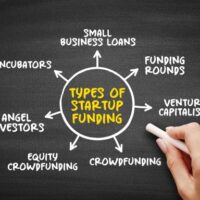
The seed round is the first real outside money most startups raise. Friends-and-family money usually falls into the “pre-seed” category. Seed funding is when founders begin taking checks from people expecting venture-style returns: Angel investors; Syndicates; Seed funds; Accelerators; and Institutional investors. The terms accepted during the seed round often shape every financing round… Read More »

What Is a Minimum Viable Product (MVP)?
If you are raising money, somebody is going to ask whether you have an MVP. Here is what they actually mean. An MVP — minimum viable product — is the smallest functional version of a product that allows a startup to test whether users actually want it. Not a polished launch. Not a perfect… Read More »